


As intelligent hardware applications continue to expand, battery systems have become a critical factor in product performance, reliability, and user experience.
From service robots and robotic vacuum cleaners to AGVs, robotic lawn mowers, portable energy storage systems, and other intelligent devices, manufacturers face increasingly diverse power requirements. Different products demand unique voltage platforms, form factors, discharge characteristics, communication protocols, and safety standards.
As a technology-driven lithium battery manufacturer, Gushine provides customized lithium battery pack solutions tailored to specific application scenarios. By integrating advanced Battery Management Systems (BMS), battery pack engineering, thermal management, and system integration capabilities, Gushine helps OEMs optimize performance, safety, and total cost of ownership.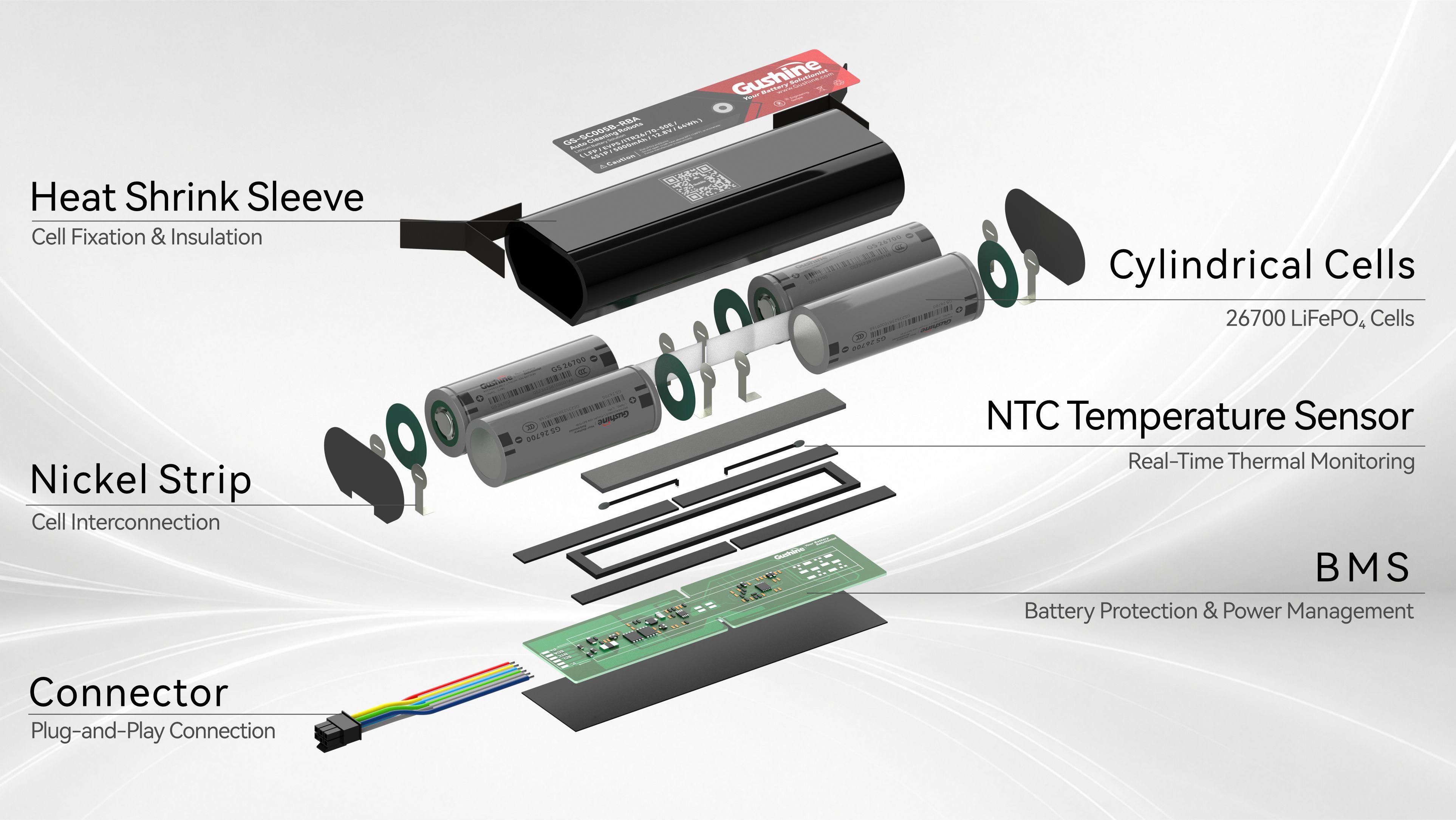
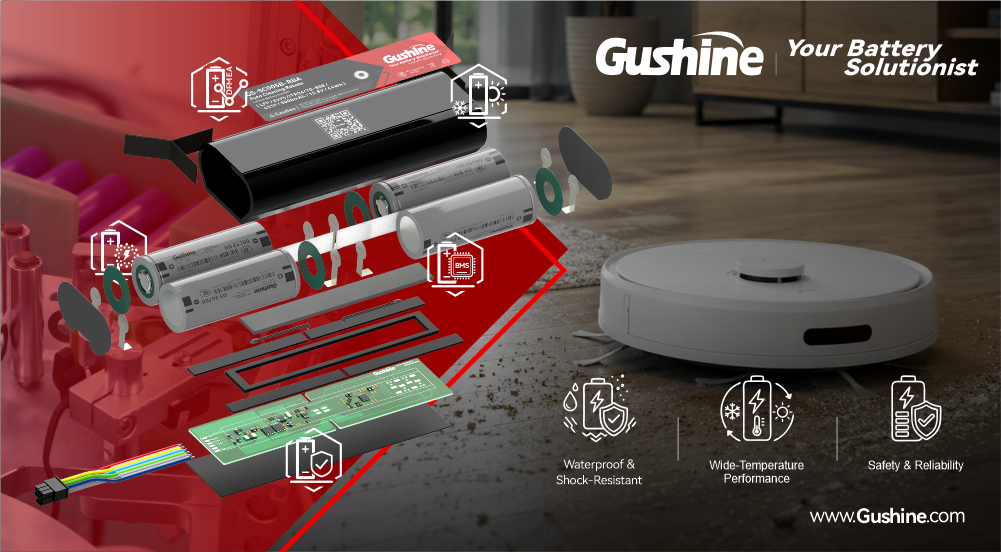
Gushine Robotic Vacuum Battery Pack Structure Overview
The Battery Management System serves as the core intelligence of every lithium battery pack.
Gushine's self-developed BMS platform features a distributed architecture capable of monitoring voltage, current, and temperature through multiple sensing channels. Advanced algorithms continuously estimate State of Charge (SOC) and State of Health (SOH), enabling accurate battery status monitoring throughout the entire lifecycle.
Key BMS capabilities include:
To support different intelligent hardware applications, the system can integrate communication interfaces including:
Remote firmware updates and historical data storage further improve battery monitoring and maintenance efficiency.
Battery performance begins with cell quality.
Gushine works closely with leading cell manufacturers to select the most suitable battery chemistry and cell configuration based on application requirements.
To improve pack consistency and cycle life, incoming cells undergo strict screening and matching processes before assembly.
This approach helps ensure:
Whether customers require LiFePO₄ or NMC battery solutions, Gushine can optimize cell selection according to capacity, voltage, discharge rate, and operating environment requirements.
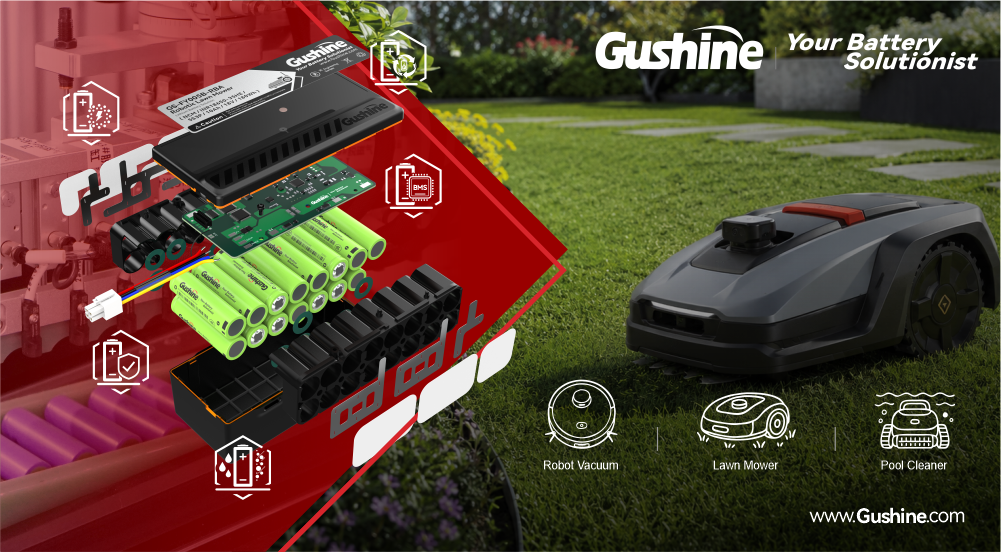
Many intelligent devices operate in demanding environments where batteries are exposed to vibration, impact, dust, moisture, and outdoor weather conditions.
To improve durability, Gushine incorporates:
Battery packs can be designed to achieve IP67 protection, while sealed connectors and potting technologies further enhance environmental resistance.
These features are particularly important for robotic lawn mowers, outdoor robots, and industrial intelligent equipment.
Intelligent devices often operate in environments with significant temperature fluctuations.
Gushine integrates wide-temperature battery cells and NTC temperature sensors throughout the battery pack to continuously monitor thermal conditions.
Combined with intelligent BMS control strategies, the system supports:
This wide-temperature capability enables intelligent devices to operate reliably in both indoor and outdoor environments.
As intelligent hardware continues to evolve, battery technology is moving toward three major directions:
Safety remains the foundation of battery system design.
Gushine implements multi-layer protection mechanisms across the cell, module, and system levels to reduce operational risks and improve long-term reliability.
For indoor service robots and robotic vacuum cleaners, LiFePO₄ batteries are increasingly preferred due to their superior thermal stability and long cycle life.
For applications requiring higher energy density or improved low-temperature performance, NMC battery solutions remain an effective option.
By selecting the most appropriate chemistry for each application, manufacturers can achieve the optimal balance between performance, safety, and cost.
As intelligent hardware products become more specialized, demand for customized battery solutions continues to grow.
Gushine's flexible development platform supports:
This enables customers to accelerate product development while maintaining competitive differentiation.
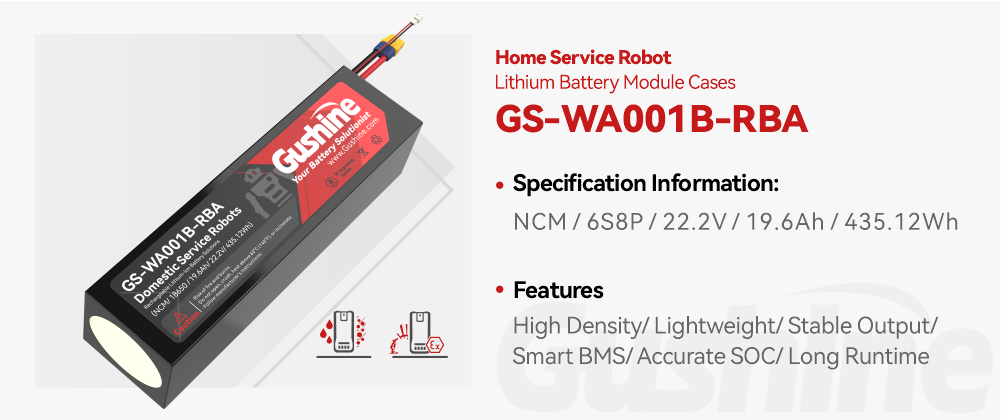
Designed for:
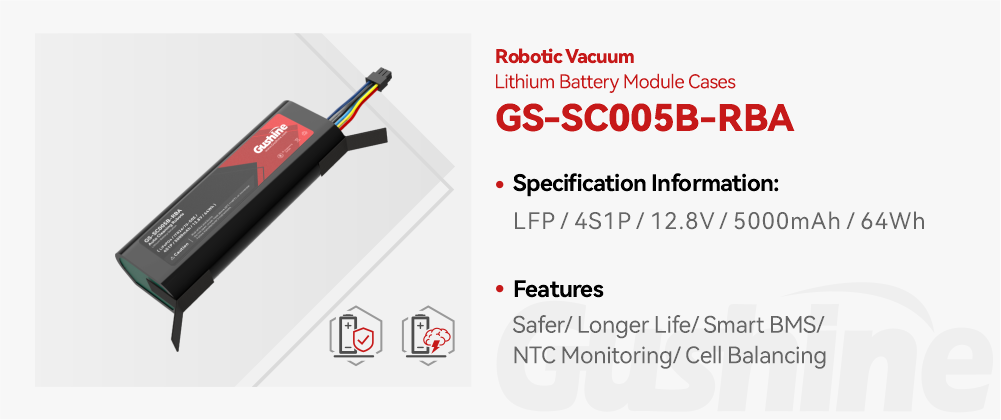
Designed for:
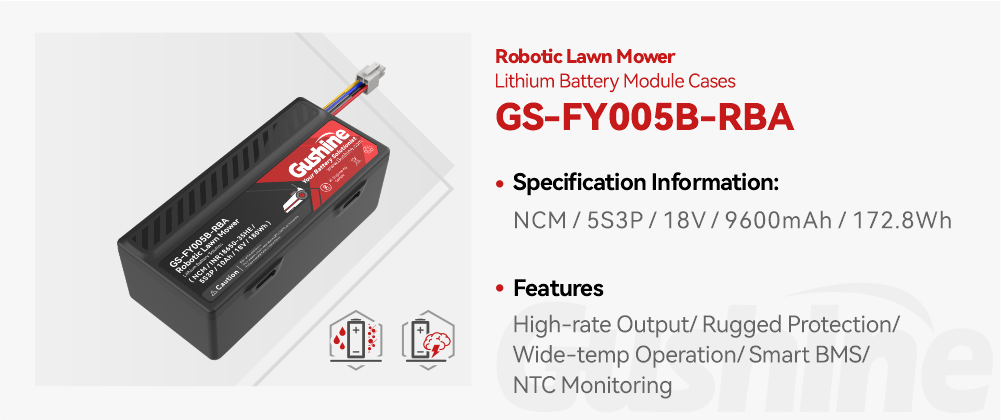
Designed for:
As intelligent hardware applications continue to grow, battery systems are becoming a key differentiator in product development.
Gushine has established vertically integrated capabilities covering cell sourcing, BMS development, battery pack engineering, thermal management, and manufacturing. Through flexible customization and engineering support, we help OEMs transform battery systems from a design challenge into a competitive advantage.
Looking ahead, Gushine will continue investing in sodium-ion battery technology, semi-solid and solid-state battery integration, intelligent battery safety algorithms, and flexible manufacturing systems to support the next generation of intelligent hardware products.
Whether you're developing service robots, robotic cleaning equipment, AGVs, AMRs, or other intelligent devices, Gushine provides custom lithium battery solutions designed around your specific application requirements.
To protect the battery cells during extended periods of inactivity, the Battery Management System (BMS) may automatically enter sleep mode. Common wake-up methods include:
If the battery does not respond to these methods, try leaving it connected to the charger for more than 12 hours. In some cases, the BMS can gradually recover by detecting a small residual voltage and restoring normal operation.
The typical service life of a robotic lawn mower battery is between 2 and 5 years, depending on usage conditions and battery quality.
Battery lifespan is mainly determined by charge-discharge cycles. Most lithium battery packs are designed to support approximately 300 to 800 full cycles before noticeable capacity degradation occurs.
Factors such as charging habits, operating temperature, storage conditions, and workload can also affect battery longevity.
Yes. Most professional battery manufacturers offer customized BMS communication solutions to meet specific equipment requirements.
Customization options typically include:
Manufacturers usually provide protocol documentation, technical support, and debugging assistance to ensure smooth integration with the customer's controller or host system.
For the best results, it is recommended to define protocol requirements (such as CANopen, Modbus, or other proprietary protocols) during the early stages of the project.

 Select a language