Gushine_POS Battery White Paper_V1_EN Download Now





We at Gushine often receive questions from users working in outdoor, medical, logistics, or industrial environments who rely on mobile power every day. One common concern is whether a portable power station can support a coffee maker during field operations. As a company engaged in portable power station manufacture, we evaluate actual usage patterns to help clients understand how heating appliances interact with mobile energy systems. Brewing coffee may seem simple, yet it requires stable power output, especially during the heating phase. Knowing how this process works helps our customers plan energy consumption more efficiently.
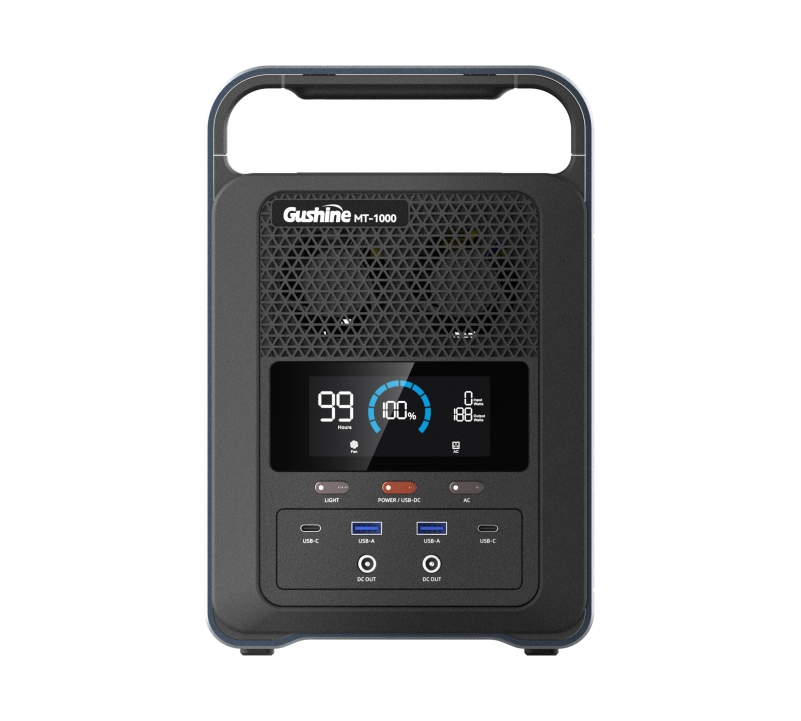
Coffee makers typically demand higher power during warm-up and extraction, and this requirement varies across models. When supporting customers in procurement or R&D roles, we focus on continuous power rather than peak labels, as this determines whether the appliance can operate reliably. In discussions with users seeking solutions from a portable power station factory, we often explain that many compact coffee makers require 600–1200 W during the heating cycle. A portable power station can run a coffee maker as long as its continuous output covers this range. This aligns with our experience in real testing projects, where we simulate field conditions and verify whether the power system maintains stable performance. Through these evaluations, we ensure that our recommendations match genuine scenarios encountered by teams working in terminals, communications, or light-duty robotics.
Our MT-1000 Portable Power Station was developed to address situations where stable, high-power output is essential. With its large capacity, multiple ports, and consistent delivery of energy, it supports everyday devices with predictable performance. When paired with a coffee maker, the MT-1000 maintains steady output throughout the heating and brewing cycle, which is a key factor in achieving smooth operation. This stability comes from our production process, where automated welding equipment, U-shaped production lines, and thorough cell-to-pack testing help us deliver reliable systems. Customers from intelligent hardware, industrial inspection teams, or temporary field operations rely on this consistency. They often combine the MT-1000 with other equipment for mobile tasks, and the testing experience we gather through ongoing portable power station manufacture projects helps us refine output behavior under different loads. These insights also support users who choose systems produced by a capable portable power station factory, especially when they need confidence in how their devices perform away from fixed power sources.
For most compact coffee makers, using a portable power station is feasible when the continuous output rating matches the appliance’s heating demand. Our project experience confirms that the MT-1000 provides reliable support in outdoor work, temporary workshops, and logistics environments where mobile energy is part of daily routine. When selecting equipment, users can focus on actual operating wattage, expected cycle duration, and whether the power station sustains stable output rather than only peak values. These simple considerations help procurement teams, engineers, and managers choose systems that meet both daily comfort needs and operational requirements during fieldwork. Through long-term testing, we have seen how a compatible setup ensures smooth operation without unnecessary interruptions, allowing teams to maintain efficiency in diverse scenarios.




 Select a language

 How Portable Power Systems Handle Heater Loads