Gushine_POS Battery White Paper_V1_EN Download Now





At Gushine, we support teams across industrial devices, medical equipment, logistics tools, and smart hardware, and many customers ask how long a Li-Po battery can remain charged after reaching full capacity. Since different systems operate with varying standby requirements, we treat this question with careful evaluation. By working closely with engineers and procurement teams, we examine storage environments, internal circuitry, and application-specific needs to determine how a custom lipo battery performs when left unused for a period of time.
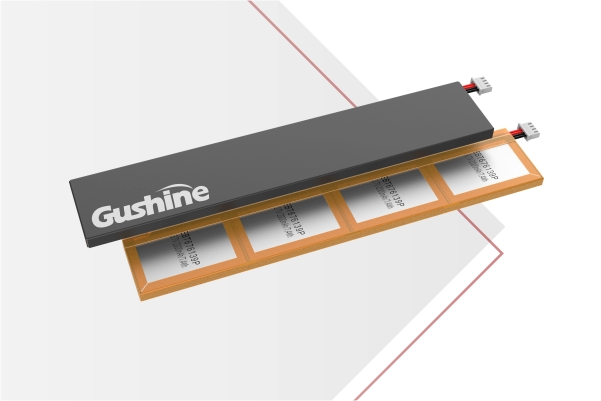
Charge-holding time is influenced by several technical and environmental factors. Temperature, humidity, and the device’s internal standby current all play significant roles. Our company designs packs with controlled leakage paths and stable chemistry to reduce unnecessary self-discharge. When customers compare various lipo battery suppliers, they often notice that differences in materials, electrolyte formulation, and protection board design directly affect how long a fully charged pack maintains usable power. For this reason, our development and validation process includes extensive testing from cell selection to pack assembly, ensuring each unit behaves consistently under recommended storage conditions.
Our ongoing work with Li-ion polymer technology allows us to integrate features that support reliable standby performance. Each custom lipo battery we develop is configured with matched cells, optimized protection thresholds, and a verified assembly structure to help manage long-term charge behavior. Many of our Custom Li-ion Polymer Battery Packs—used in robotics, industrial terminals, and medical instruments—adhere to ISO 9001, ISO 13485, UL, and CE certifications, which customers often review when assessing lipo battery suppliers for compliance. Key characteristics such as lightweight construction, flexible customization options, dependable discharge capability, and strong thermal stability contribute to stable operation both during use and storage.
In practical applications, the length of time a Li-Po battery stays charged varies with the device’s design. Even when powered off, certain control circuits or communication modules may draw small amounts of current. Our team helps customers analyze these background loads and verify real-world standby expectations. By conducting systematic storage assessments, we obtain reliable data on how the pack behaves over time, allowing customers to plan their workflows without uncertainty. This collaborative review ensures the energy-retention performance of our solutions aligns with device requirements and operating habits.
A charged Li-Po battery maintains its energy most effectively when supported by careful engineering and proper handling in the field. We guide customers on storage recommendations and charging practices to help each pack maintain its capacity for a predictable duration after full charging. Understanding how long the battery can stay charged enables teams to develop dependable devices and manage operational schedules confidently. At Gushine, our continued focus on disciplined design practices allows customers comparing lipo battery suppliers to work with solutions built on stable chemistry, controlled processes, and thorough testing.




 Select a language

 Exploring the Category of LiFePO4 Batteries