


In hazardous industries such as oil & gas, chemical processing, and mining, batteries are no longer simple energy sources.They must function as certified safety-critical systems, capable of operating reliably in explosive atmospheres, high humidity, and severe mechanical stress.
This article outlines how Gushine engineers explosion-proof lithium battery solutions through a system-level integration of standards, materials, and intelligent control.
In explosion-proof battery design, Ex markings define the essential safety requirements for hazardous environments.
A classification such as Ex db IIC T4 Gb specifies how electrical energy is controlled, the maximum allowable surface temperature, and the level of protection required for Zone 1 applications involving highly flammable gases.
At Gushine, battery customization begins with translating these requirements into application-specific designs.Meeting Ex standards is the baseline; delivering reliable safety performance in real operating conditions is the ultimate goal.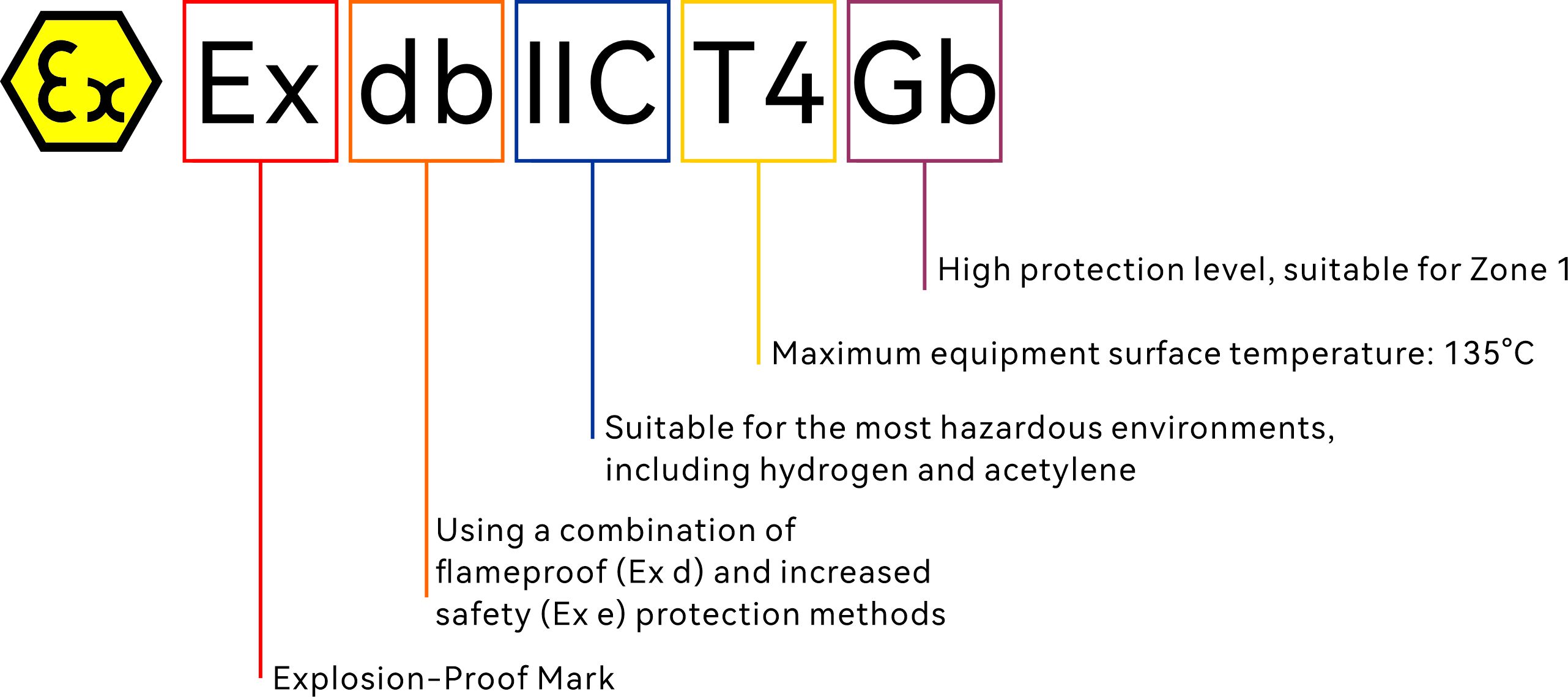
In explosion-proof battery systems, potting is not a cosmetic process—it is a critical safety function.
Gushine uses high-performance, flame-retardant potting compounds to physically isolate cells, suppress thermal propagation, and enhance structural integrity under extreme conditions.
The cured compound forms a dense solid structure that limits the release of high-energy debris in the event of a single-cell failure.
Non-combustible, low-thermal-conductivity materials inhibit heat transfer between cells, preventing thermal runaway from propagating across the module.
With adhesion strength exceeding 10 MPa on aluminum, copper, and engineering plastics, the potting system absorbs external shock and vibration, reducing internal mechanical stress.
Gushine applies a proprietary two-stage potting process to eliminate internal air pockets and ensure complete sealing:
This process converts the battery interior from a potential ignition risk into a stable, self-contained safety structure.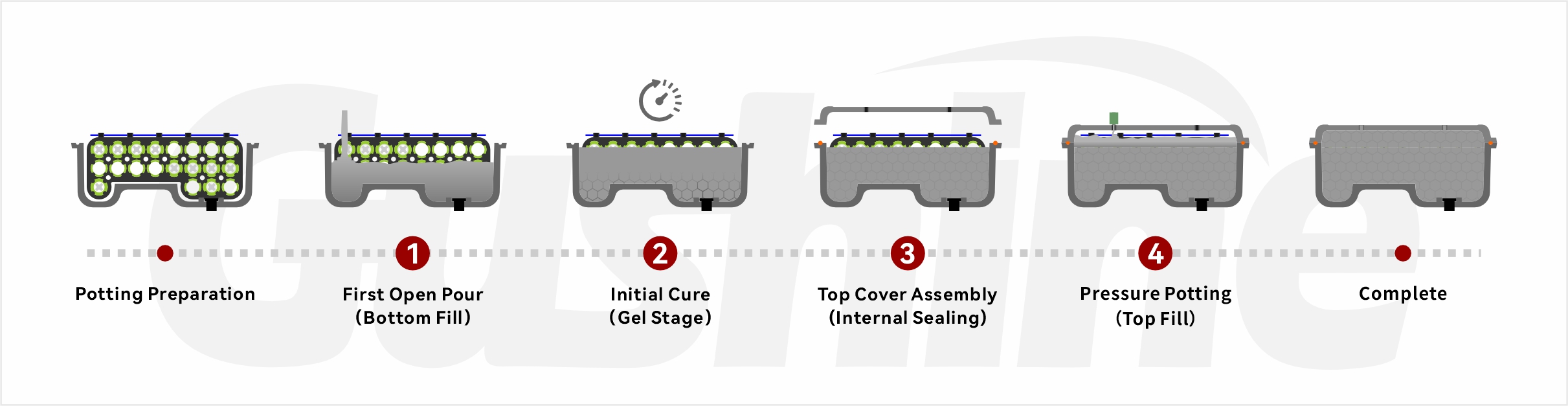
While physical potting forms a robust static barrier, the Gushine explosion-proof BMS provides dynamic intelligence for early risk detection and precise intervention within milliseconds.
Gushine’s explosion-proof battery solutions are validated through real-world deployments in high-risk industries. By integrating intrinsically safe electronics with robust physical protection, system-level safety is achieved in diverse extreme environments.
In petrochemical facilities, batteries must meet Ex ib intrinsic safety requirements with zero tolerance for ignition risks.
Gushine addresses this by combining intrinsically safe BMS circuits with fully potted battery modules and IP67-rated enclosures, ensuring both ignition prevention and long-term reliability under moisture, salt mist, and corrosive conditions.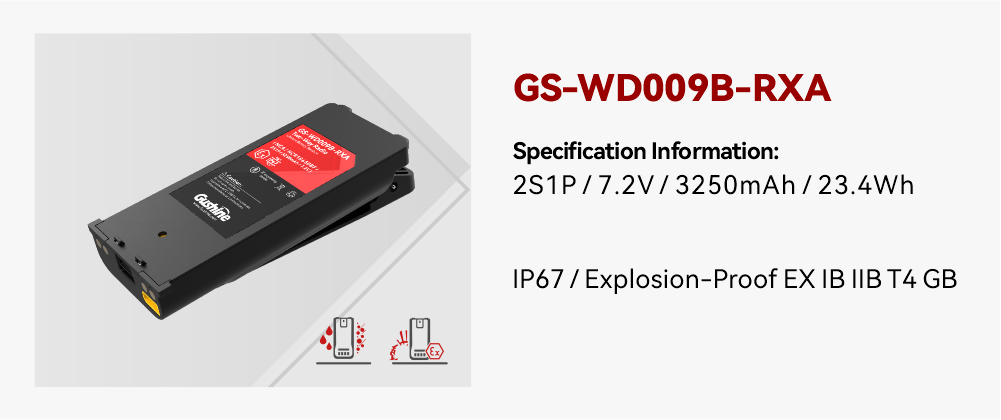
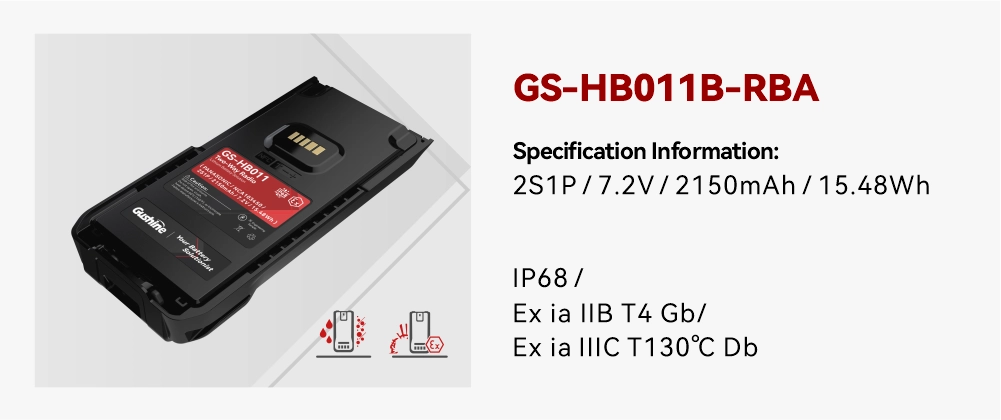
Underground mining applications demand the highest explosion-proof level, Ex ia IIC T4 Gb, under humid, dusty, and impact-prone conditions.
Gushine designs BMS circuits to IIC gas group standards with microsecond-level short-circuit protection, while high-adhesion potting forms a rigid, impact-resistant structure that fully seals internal circuitry against dust and moisture—enabling stable operation and successful certification.
Explosion-proof lithium battery safety is not achieved through a single component or isolated technology. It is built through a closed-loop engineering process spanning:
Standards interpretation → Scenario analysis → Material science (potting) → Electronic engineering (BMS) → Mechanical design → Manufacturing execution
Gushine designs explosion-proof batteries as integrated safety systems—engineered, validated, and verified for real hazardous environments.
Every layer of protection is intentionally connected, ensuring reliable performance in applications where failure is not an option.

 Select a language

 How Long Do Lithium Batteries Last? Understanding Battery Life and Gushine’s Customized Solutions